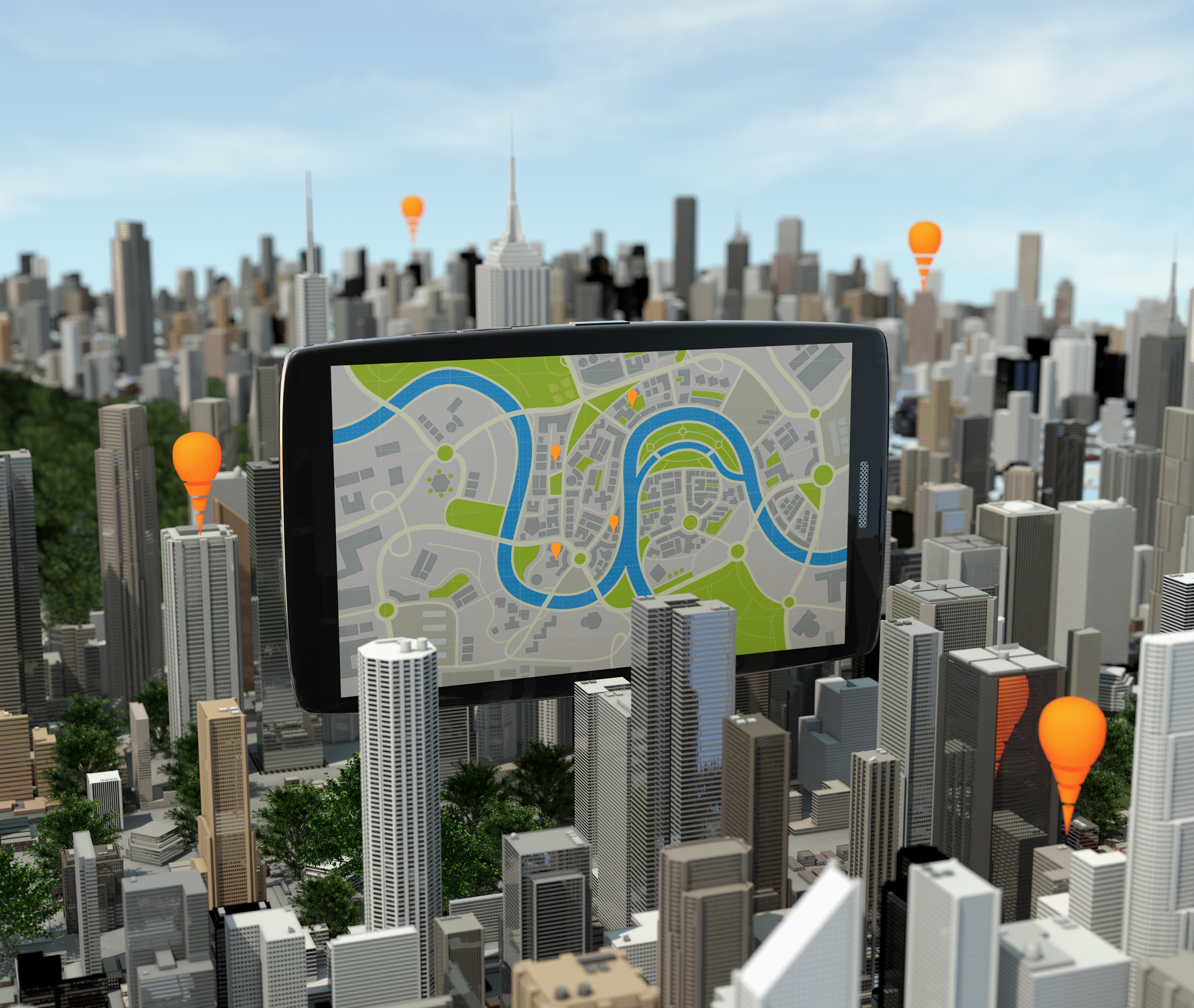
Beyond restricting communication to citizens and taxpayers via traditional means, towns who want to reach out to residents and visitors now also have access to new, mostly mobile technologies, thereby making their areas both more intelligent and more intelligible.
Smartphones equipped with a GPS and camera have made it possible to create geo-localized services, much like real time smart tag reading – unique bar codes containing or providing links to further information.
Whether they are tourists or residents, all users want to better understand their environment and have access to available services. Technologically, infrastructures which add a layer of information to urban spaces are the same for both target audiences but their content tends to be very different.
Whether they are connected via an application or directly on line, geo-localized citizens should be able to locate nearby practical services, call emergency help, bring up public information related to a given location (budget, permission to build…). Alongside visitor guides, smart tags would highlight projects, showing the results of public endeavors and presenting future projects.
Tourists or short-term visitors are generally not interested in a town’s local budget and practical issues, instead requiring detailed information about local heritage and commercial or public services. With the help of guides or tags offered in a choice of languages based on visitor demographics, evening or week-long visitors would have questions answered in real time, be they practical, historical or cultural.
Unlike services, a vast portion of the content for implementing these ideas already exists. Specialized agencies could support towns to create and launch such services, starting by bringing together and adapting existing material to produce complementary products, translations or a cross-platform dissemination of information. Following the launch of this type of service, crowd-sourcing citizen participation would work well, providing a less official connotation.
Towns, regions and states must without further ado look into these questions, so this new space is not left in the hands of purely commercial service providers, for whom generating information is just a means of collection behavioral information, which is then sold or monetized through ultra-targeted advertising.
The conjunction of high speed mobiles, geo-localization and smart tags have made cities potentially intelligent and intelligible, with the promise of offering citizens access to exhaustive services and making touristic and historical heritage more striking. Technology is available… it’s now time to find political determination.